ROUGHNECK / TEXAS REMOVAL GUIDES
Boat Removal
Fiberglass hulls, aluminum boats, and pontoons. On a trailer or on supports: show us how it sits.
Show where it sits. We quote the load and the access.
LOOK AT THE LOAD FIRST
The hull’s here. The water’s over there.
A boat can outlast its trailer, its motor, and the reason you bought it. Roughneck reviews fiberglass and aluminum hulls, pontoons, sailboats, and boat-and-trailer removals. Start with where it sits: driveway, storage yard, blocks, or marina. Show the hull and whatever is holding it up. Tell us whether the trailer rolls. We work out the removal approach from those details, not from the boat’s age.
Send the hull length, motor, trailer tongue, tires, and supports in photos. Mention fuel, batteries, or water left aboard. Say whether it is on land or in the water, and who controls entry. Keep the supports in place while the loading approach is reviewed.
Before we load,
we look.
Photograph it where it sits.
The furniture, boxes, room contents, or yard pile. Then photograph the gate, driveway, or stairs. Send your pickup ZIP and deadline with those pictures.
Tell us what stays.
The cabinet staying in the garage. The boxes the family is keeping. The slab under the shed. We agree on the removal, free quote, and pickup window with you.
Open the agreed route.
Have the entrance available when the crew arrives. We carry and load the items included in the quote. Walk through the cleared area with us before the job is handed over.
Closing date? Storage deadline? Say when it needs to leave. We’ll confirm a pickup window, including same-day availability if the job and schedule allow.
Illustrative scene / Include the route to the trailer.What the photos need to show.
- Hull, motor, and approximate length
- Trailer tongue, supports, and wheels
- Land access or marina entry rules
Start with the hull, motor, and trailer.
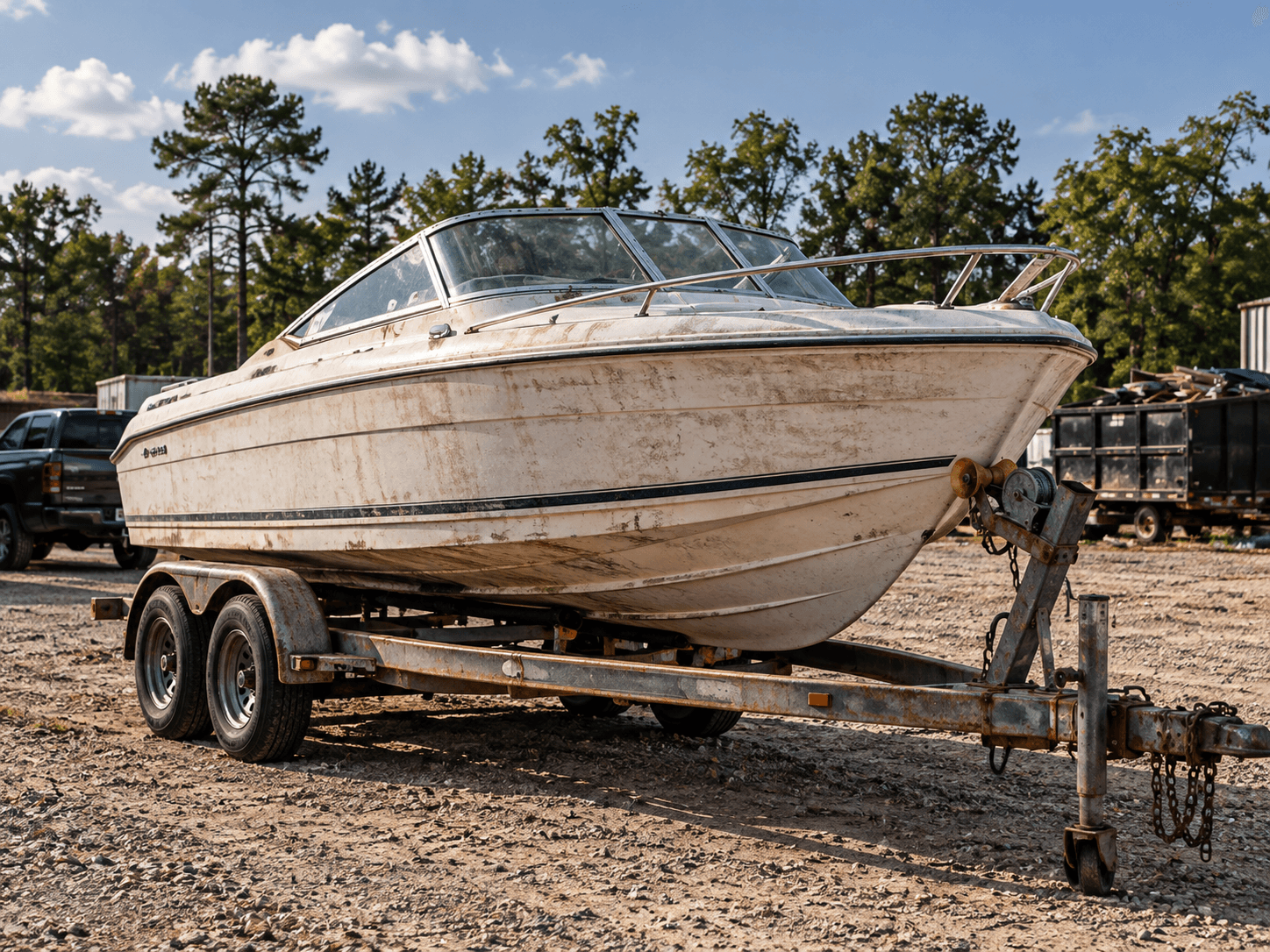
Start with the hull, motor, and whatever is supporting the boat. Send its length and identify fiberglass, aluminum, pontoon, or sailboat. Photograph a mast, tower, or cabin that changes its height. Show damage as it is. Then photograph the trailer separately so both parts of the move can be assessed.
For a trailer, include the tongue, hitch, tires, axle area, and its connection to the boat. Let us know if it rolls or has been sitting on flat tires. A trailer underneath a boat does not guarantee a safe road pickup. The review determines whether towing, separate loading, or an agreed breakdown approach is appropriate for that specific hull and site.
No trailer means a different loading question.
Keep the blocks or supports in place. Photograph the boat where it sits and show the route to firm loading ground. Include fences, gates, and the distance to the truck. A hull without a trailer needs that setup reviewed before a loading or breakdown approach is agreed.
A boat in the water is another scope entirely. Tell us whether it is afloat, partly submerged, or sunk, and identify the location. Routine land removal should not be confused with water recovery. Marina permissions, dock access, and recovery requirements need review before anyone commits to that work. A photo of the shoreline alone is not enough to establish a removal plan.
Ownership does not disappear with an old boat.
Tell us who owns the hull, outboard, and trailer and which records are available. Those pieces can have separate paperwork. Texas Parks and Wildlife handles boat guidance; the vehicle title system covers trailers. Use the official links below and raise missing documents before a pickup is confirmed.
If a boat was left on property, contact us about the situation before booking a haul. An abandoned appearance does not settle the authority to dispose of it. Texas also has guidance for notifying the state after a boat is destroyed or disposed of. Use the official information for the current requirements and discuss missing documents early. We review authorization before confirming removal.
Show what is left aboard.
Show what is left aboard: loose gear, batteries, fuel containers, water, and stored belongings. Set aside personal items. Mention leaks and unknown liquids without pumping them into the yard or drain. We need to discuss those contents along with the hull before confirming the accepted removal.
Tell us whether the motor, trailer, covers, and loose equipment should go with the boat. If there is another debris pile nearby, photograph it separately and ask to include it. This makes the quote match the complete job. Reusable equipment, metals, and damaged hull materials may have different destinations; their handling must be agreed for the load rather than assumed.
Make the marina or property handoff clear.
A marina or storage operator may control entry and loading hours. Tell us who approves access and whether someone must be present. At a home, show the driveway and turning room. Include overhead obstructions around tall hulls or masts. We confirm the pickup window with those arrangements in mind.
If a sale, lease deadline, or yard cleanup is driving the date, say that up front. Ask about availability after sending the photos and ownership details. Before arrival, identify anything staying on the property and make the agreed access available. A boat removal should end with the approved hull, trailer, and contents accounted for—not a last-minute disagreement about which pieces were meant to go.
There’s more on the property?
Show it in the same request: the items in the garage, the pile behind the shed. These guides explain what we’ll need to know about that work:
RV & Camper RemovalCommercial & Encampment CleanupCheck the Texas and local requirements
Use these official sources for paperwork, permits, and material handling. For your load, ask us where the accepted materials will go. Resident waste programs have their own rules.
- Texas boat ownership and title guidance
Review ownership records and the state’s boat disposal notification guidance.
- Texas household hazardous waste guide
Check separate handling options for chemicals, fuel, paint, and other household materials.

Text the load.
Show the way out.
Show the load, the entrance, and where we can park.
Add the pickup ZIP. We’ll quote the actual work.
Questions before we load.
Not sure about the paperwork, the stairs, or what can go on the truck? Call with the details.
Ask Roughneck about your loadDo you take boats without a trailer?
Yes, send the hull, supports, and a view of the loading route. Leave the boat supported as it is. We assess loading, breakdown, or another approach for that site before agreeing to a removal.
What if it's sunk or on blocks?
Show the blocks and route to firm ground for a land pickup. If the boat is submerged, identify its location and condition. Water recovery needs its own assessment; it is not covered by an ordinary land-removal quote.
Do I need a title to junk a boat?
Tell us what boat, motor, and trailer records you have. They can involve different ownership documents. If anything is missing or the boat was left by someone else, raise it at first contact so authorization is reviewed before pickup.
Get a
free quote.
Tell us what’s leaving. Add the pickup ZIP and any stairs, gates, or access details. Photos are optional.