ROUGHNECK / TEXAS REMOVAL GUIDES
Demolition & Teardown
Shed, deck, fence, or small garage. Tell us what comes down and whether the slab stays.
Show where it sits. We quote the load and the access.
LOOK AT THE LOAD FIRST
The shed goes. What about the slab?
A shed teardown has a finish line. Maybe the concrete stays for a new building. Maybe the deck goes and the fence stays. Roughneck reviews sheds, decks, fences, carports, and small garages with those boundaries in mind. Photograph every side, the contents, and anything attached. Tell us about power, water, or gas. We agree on what comes down and what gets loaded before the work starts.
Send the length, width, height, and materials. Show the foundation and the route to the loading area. Mark parts you are keeping. Mention utility connections, permit questions, stored containers, or a shared fence before the teardown is scheduled.
Before we load,
we look.
Photograph it where it sits.
The furniture, boxes, room contents, or yard pile. Then photograph the gate, driveway, or stairs. Send your pickup ZIP and deadline with those pictures.
Tell us what stays.
The cabinet staying in the garage. The boxes the family is keeping. The slab under the shed. We agree on the removal, free quote, and pickup window with you.
Open the agreed route.
Have the entrance available when the crew arrives. We carry and load the items included in the quote. Walk through the cleared area with us before the job is handed over.
Closing date? Storage deadline? Say when it needs to leave. We’ll confirm a pickup window, including same-day availability if the job and schedule allow.
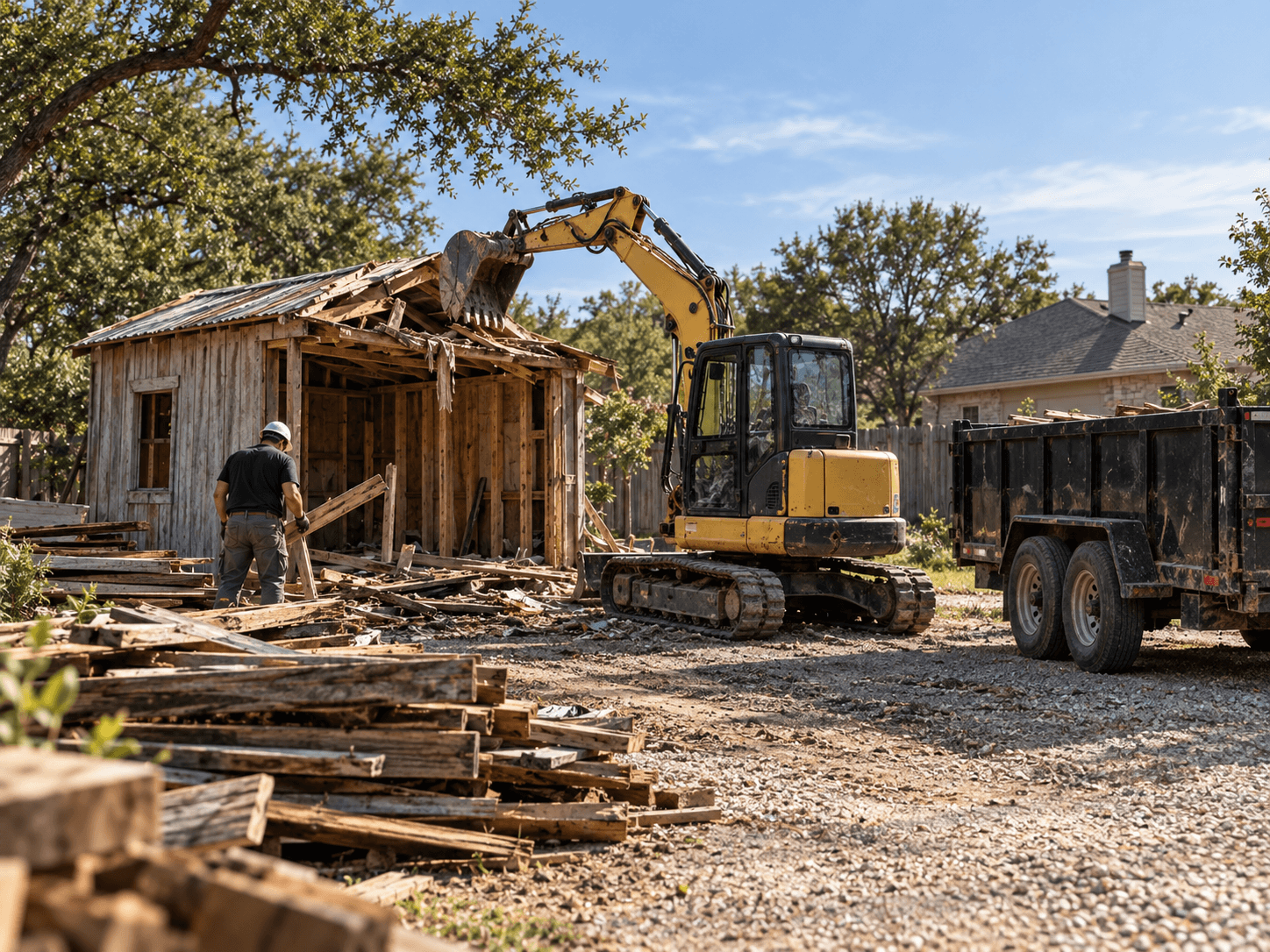
Illustrative scene / Include the route to the trailer.What the photos need to show.
- Every side of the structure
- Dimensions, foundation, and materials
- Utilities, attachments, and truck access
Define exactly what comes down.
Walk around the shed, deck, fence, carport, or small garage with your camera. Show its length, width, height, and attachments. Mark the section coming down and the parts staying. Mention a shared fence or deck joined to the house. The crew needs that boundary before materials start moving.
Include roofing, siding, posts, railings, and any stored contents in the photos. Explain whether doors, fixtures, or materials are being saved. Do not strip a failing structure yourself to reduce the job. We review the condition and access first, then agree on a removal scope that accounts for the structure, the debris, and the parts of the property being protected.
Check permits and utilities before the work date.
The actual address and structure determine the permit question. Tell us whether the property is within city limits and which authority controls it. A small shed is not automatically exempt. For Houston, use the permit portal below as a starting point; other addresses need their local requirements checked.
Tell us about power, water, gas, drainage lines, and any connection to another building. Appropriate utility disconnection must be settled before removal. Do not cut a line or turn off a switch and assume the structure is ready. If you are unsure whether a connection is active, say so. The plan needs to address that uncertainty before a crew begins taking materials apart.
A teardown and a slab removal are separate scopes.
Say whether the slab, footings, or embedded posts stay. Photograph their visible edges and give approximate dimensions where safe. A picture of the roof cannot show those details. We discuss taking down the structure and removing its foundation as separate tasks before quoting the finish you need.
Also explain the finish you need. Clearing the structure, collecting loose debris, removing concrete, and preparing land for a new build are different outcomes. We agree on what is included before scheduling. If the next contractor needs a particular condition, tell us that requirement early. A clear finish point keeps the demolition plan aligned with the next use of the property.
Plan the debris route through the property.
Follow the path from the structure to the loading area. Show side yards, gates, slopes, parked vehicles, and landscaping that stays. Tell us if a shared driveway or neighboring entrance is needed. Arrange permission before relying on that route. The debris has to leave through the access shown.
Flag unusual materials or anything that may need separate assessment. Older building materials, unidentified containers, stored chemicals, and concealed damage should not be treated as ordinary lumber without review. You do not need to diagnose a material yourself. Describe what you know and send photos from a safe location. We confirm what work and handling can be included in the agreed scope.
Agree on the handoff before teardown starts.
Name the contractor, property contact, or realtor who needs the area next, and give us the deadline. We review the dimensions, connections, condition, and debris route before discussing the work window. Some structures need a site check as well as photos. Tell us what the handoff must include.
Before the crew arrives, mark keep items and make the approved access available. Keep people and pets out of the work area. If contents or utilities change, let us know before the scheduled day. At completion, review the agreed area and any remaining slab or fixtures together. The handoff should show which structure and debris were removed and which slab or fixtures remain.
There’s more on the property?
Show it in the same request: the items in the garage, the pile behind the shed. These guides explain what we’ll need to know about that work:
Junk Removal & HaulingEstate & Property CleanoutCheck the Texas and local requirements
Use these official sources for paperwork, permits, and material handling. For your load, ask us where the accepted materials will go. Resident waste programs have their own rules.
- Houston permit portal
For a Houston address, check the appropriate city department before scheduling a teardown.
- Texas household hazardous waste guide
Check separate handling options for chemicals, fuel, paint, and other household materials.
Text the load.
Show the way out.
Show the load, the entrance, and where we can park.
Add the pickup ZIP. We’ll quote the actual work.
Questions before we load.
Not sure about the paperwork, the stairs, or what can go on the truck? Call with the details.
Ask Roughneck about your loadDo I need a permit?
The structure and actual address decide which authority to ask. Bring up permits when requesting the quote. A small shed is not automatically exempt. Utility disconnection also needs to be arranged before taking the structure apart.
Do you remove the concrete pad?
Say whether the concrete stays or goes and send its dimensions and edge photos. Removing the structure above it and removing the pad are separate tasks. We discuss both before quoting the finish you want.
How long does a shed teardown take?
A roof-only photo cannot settle the schedule. Send dimensions, every side, contents, utility connections, and access. We discuss the work window after reviewing those details. Ask about your deadline when you contact us.
Get a
free quote.
Tell us what’s leaving. Add the pickup ZIP and any stairs, gates, or access details. Photos are optional.