ROUGHNECK / TEXAS REMOVAL GUIDES
Commercial & Encampment Cleanup
Dumped material and commercial sites. Mark the work boundary and identify who authorizes removal.
Show where it sits. We quote the load and the access.
LOOK AT THE LOAD FIRST
Show the lot. Mark the cleanup boundary.
A pile at the entrance does not show the whole site. Roughneck reviews commercial lots, dumped debris, and encampment cleanup requests with an authorized property contact. Photograph each debris area and mark the boundary of the work. Tell us who opens the site, which areas are occupied, and what material is present. Sharps, chemicals, or biological waste need to be raised before a cleanup is accepted.
Identify who can approve the work and any changes. Include gates, working hours, site rules, and the loading area. Flag hazardous or unknown materials without handling them for photos. Ask about required disposal records and completion photos before the pickup is booked.
Before we load,
we look.
Photograph it where it sits.
The furniture, boxes, room contents, or yard pile. Then photograph the gate, driveway, or stairs. Send your pickup ZIP and deadline with those pictures.
Tell us what stays.
The cabinet staying in the garage. The boxes the family is keeping. The slab under the shed. We agree on the removal, free quote, and pickup window with you.
Open the agreed route.
Have the entrance available when the crew arrives. We carry and load the items included in the quote. Walk through the cleared area with us before the job is handed over.
Closing date? Storage deadline? Say when it needs to leave. We’ll confirm a pickup window, including same-day availability if the job and schedule allow.
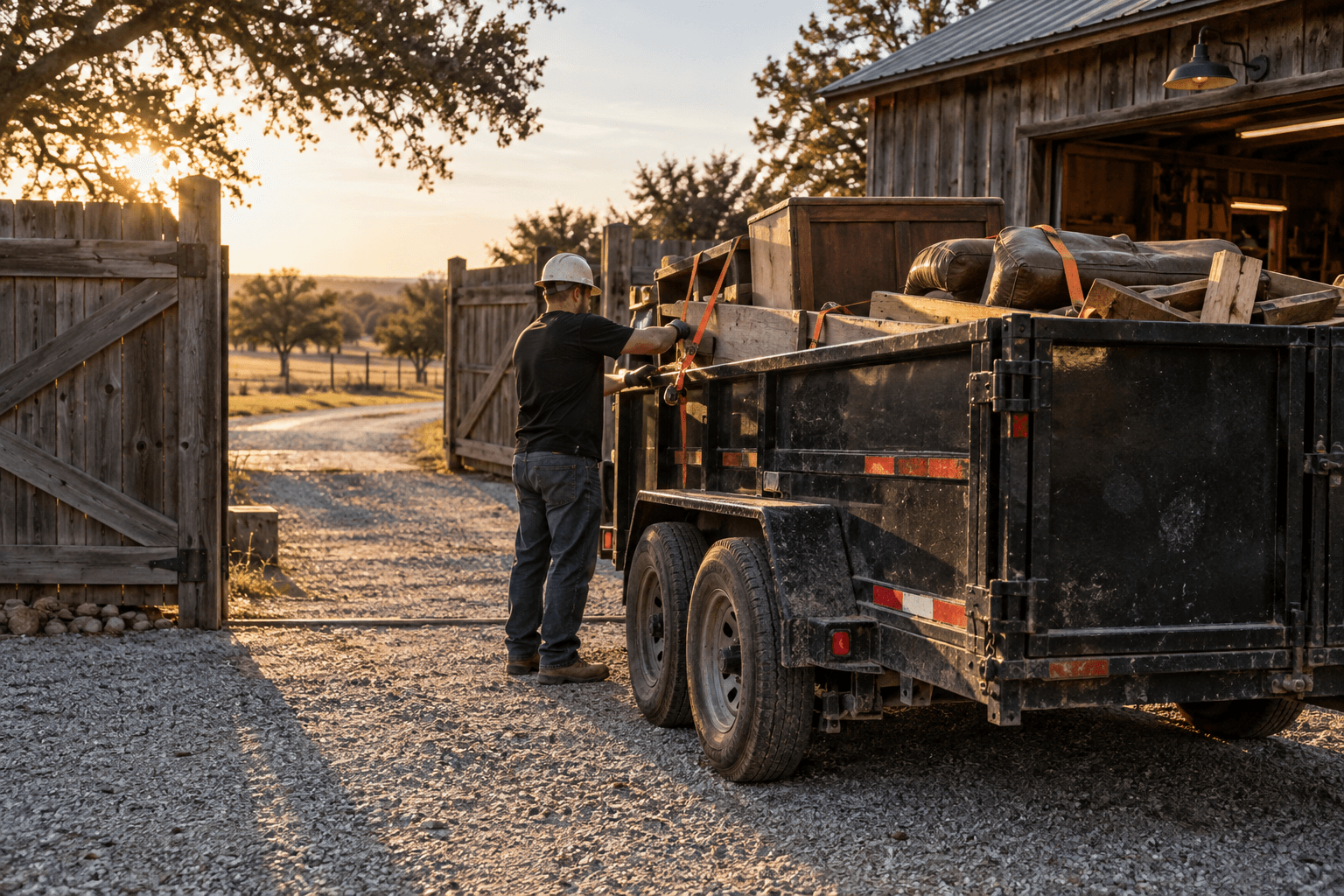 Illustrative scene / Include the route to the trailer.
What the photos need to show.
- Full site and each debris area
- Entry rules and loading boundaries
- Authorization, hazards, and records needed
Start with site authority and a defined boundary.
Identify the owner, manager, HOA representative, or other contact authorizing cleanup. Mark the work boundary and photograph the material within it. Tell us about adjacent property, shared entrances, and occupied areas. Those need discussion before they can be included in the site plan or removal request.
For an encampment-related request, explain the site status before scheduling. Debris removal does not by itself authorize displacement, removal of personal property, or work in an occupied area. The property representative needs to resolve the appropriate authority and access arrangements first. We assess the cleanup scope from the actual situation rather than treat every lot as an ordinary unoccupied dumping site.
Photograph the whole site and flag unusual material.
Take a wide view of the lot, then show each concentration of debris. Include material behind buildings or fences where safely visible. Give approximate dimensions and identify the area to clear. Tell us about large objects, furniture, and construction leftovers so the request accounts for more than visible bags.
Disclose sharps, biological waste, chemicals, leaking containers, unstable structures, or other possible contamination. Do not investigate an unknown material or move it to make the photos clearer. Specialized handling may be necessary and must be reviewed separately. We confirm what work can be accepted before dispatching a crew; ordinary debris hauling is not a substitute for every kind of hazardous cleanup.
Build the work window around the site rules.
Show the entrance, route, and loading area. Give us security check-in, work-hour restrictions, delivery traffic, and surfaces that cannot support a loaded truck. If the business stays open, explain how the work area is controlled. We discuss those arrangements before agreeing on the cleanup window.
If the site has overhead lines, drainage features, soft ground, or a narrow exit, include them in the photos. Confirm who can open the property and who has authority to approve a scope change. We need a defined loading route rather than a last-minute instruction to use a neighboring lot. Permission for any shared or third-party access should be arranged by the authorized representative.
Ask for the records your property needs.
Ask for the documents your manager or project file needs before booking. Specify completion photos, disposal records, or an itemized work description. We confirm what can be supplied for the accepted materials and job. Different waste can follow different handling routes, so the requirement needs to be specific.
Also discuss invoicing and payment arrangements before scheduling. Any account terms need to be agreed in advance; they are not automatic because the property is commercial. Keep the authorization contact, billing contact, and site contact clear. When one person approves the cleanup and another receives the handoff, both should have the same description of the included areas and expected finish.
Define the cleanup finish and next use.
Tell us the next use of the area: loading, inspection, construction, or ordinary property access. Identify whether the request includes only loose waste or also another service such as teardown. Vegetation work and surface repair are separate questions. We discuss the accepted tasks and handoff condition before sending a crew.
Give us deadlines and update the photos if more debris appears before the scheduled day. At completion, the authorized representative should check the agreed areas and the documentation arranged in the scope. A clear handoff makes it easier to distinguish a finished cleanup from remaining construction or property work. It also gives the next contractor a defined starting point for the site.
There’s more on the property?
Show it in the same request: the items in the garage, the pile behind the shed. These guides explain what we’ll need to know about that work:
Demolition & TeardownJunk Removal & HaulingCheck the Texas and local requirements
Use these official sources for paperwork, permits, and material handling. For your load, ask us where the accepted materials will go. Resident waste programs have their own rules.
- Texas household hazardous waste guide
Check separate handling options for chemicals, fuel, paint, and other household materials.
Text the load.
Show the way out.
Show the load, the entrance, and where we can park.
Add the pickup ZIP. We’ll quote the actual work.
Questions before we load.
Not sure about the paperwork, the stairs, or what can go on the truck? Call with the details.
Ask Roughneck about your loadDo you handle biohazard?
Flag sharps, biological waste, or suspected contamination at first contact. Do not move it to improve a photo. Specialized handling needs a separate assessment. We confirm what cleanup work can be accepted before sending a crew.
Can you invoice net 30?
Raise invoicing and account terms before agreeing to the cleanup. Terms need to be discussed and confirmed for the job. Tell us if the billing contact differs from the person authorizing work or opening the site.
Do you provide disposal documentation?
Tell us which records your property manager or project file needs before booking. We confirm what can be supplied for the accepted materials and work. Completion photos and disposal records should be part of that conversation.
Get a
free quote.
Tell us what’s leaving. Add the pickup ZIP and any stairs, gates, or access details. Photos are optional.